Picture this: You type a query into a search engine, click a link, and land on a website. What hits you is a giant, unmoving wall of text, a couple of generic stock photos, and a layout that looks like it was designed when dial-up internet was still a thing.
What do you do? You hit the back button. Within three seconds, you’re gone.
In the SEO world, that rapid escape is called a bounce, and your bounce rate is the percentage of visitors who leave your site after viewing only one page. A high bounce rate tells search engines like Google one thing: “People don’t like what they found here.”
So, how do you fix it? How do you transform a passive reader into an engaged user?
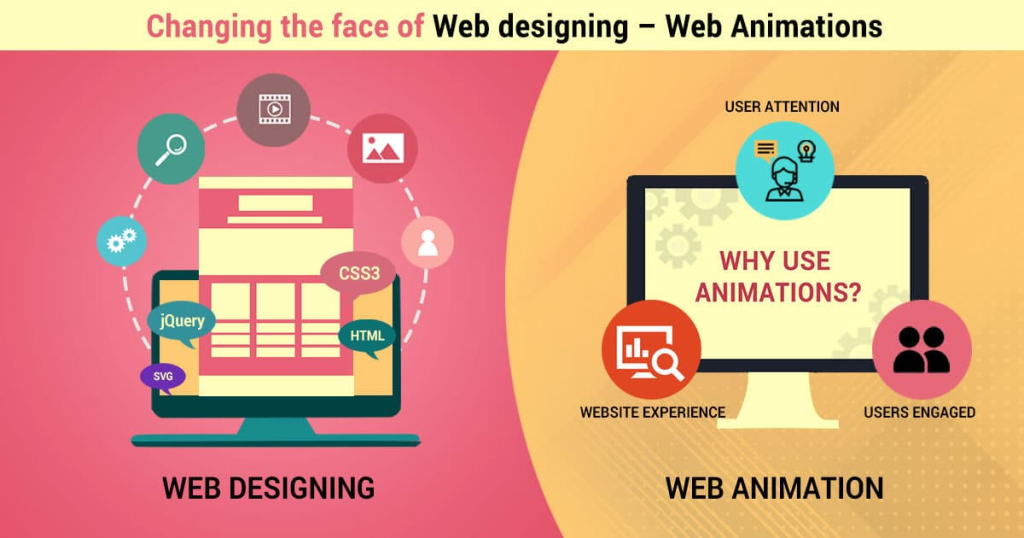
The answer lies in dynamic design. Incorporating smart web animations and interactive visuals isn’t just about making your site look modern—it’s about capturing attention, guiding the human eye, and intentionally keeping people on your page longer. Let’s break down the exact science of how movement crushes bounce rates and boosts your digital performance.
Why Movement Matters: The Psychology of Engagement
Human beings are hardwired to notice movement. It’s an evolutionary survival trait—our eyes naturally track anything that shifts, blurs, or glides across our field of vision.
When applied to web design, this cognitive trigger becomes a powerful tool. When a user lands on a page and encounters subtle, purposeful animation, two things happen immediately:
- The Hook: The visual stimulation interrupts the urge to skim and bounce.
- The Reward: It signals to the brain that the website is active, high-quality, and worth exploring.
The Golden Rule of Web Animation: Movement must always serve a purpose. If an animation exists purely to look flashy, it’s a distraction. If it exists to tell a story or clarify data, it’s an engagement driver.
3 Visual Strategies That Keep Users on the Page
You don’t need to turn your website into a chaotic video game. Instead, strategic, micro-interactions and smooth transitions do the heavy lifting. Here are the three most effective interactive elements you can implement today:
1. Smart Scroll-Triggered Animations
Static pages feel long and exhausting to read. Scroll-triggered animations change the game by making elements fade, slide, or scale into view only as the user scrolls down.
This creates a sense of pacing. Instead of overwhelming a visitor with all your content at once, you feed it to them in bite-sized, digestible chapters. It turns reading a webpage into an active journey, naturally encouraging them to scroll lower and lower.
2. Micro-Interactions (The Feedback Loop)
A micro-interaction is a tiny, functional animation that responds to a user’s specific action. Think of a button that smoothly shifts color when hovered over, a shopping cart icon that bounces slightly when an item is added, or a progress bar that fills up as you fill out a form.
These small touches provide instant visual feedback. They make the digital environment feel physical and responsive, satisfying the user’s subconscious desire for control and interaction.
3. Interactive Data & Infographics
If you have complex data, statistics, or steps to explain, do not use a standard bulleted list. Use interactive charts, toggle menus, or clickable diagrams.
When a user can slide a bar to see a physics simulation, click a timeline event to reveal details, or hover over a product feature to see how it works inside, they stop skimming. They start playing. Time spent on the site skyrockets, and your bounce rate plummets.
The SEO Secret: Dwell Time and User Signals
You might be wondering: “This sounds great for design, but how does it increase my organic search traffic?”
Google’s algorithms are incredibly sophisticated. While they look at keywords and backlinks, they also heavily weigh user experience metrics. One of the most critical factors is Dwell Time—the actual number of minutes and seconds a user spends on your page before clicking back to the search results.
| If a user bounces in… | Google assumes… | The SEO Impact |
| 0 to 10 Seconds | The content is irrelevant, spammy, or poorly designed. | Negative: Your search rankings will slowly drop over time. |
| 2+ Minutes | The user found valuable, highly engaging material. | Positive: Google rewards your domain with higher visibility. |
By utilizing interactive visuals to extend that initial visit from 5 seconds to 2 minutes, you directly signal to search engines that your website is a premium authority in its niche.
The Danger Zone: When Animation Backfires
While movement is a superpower, too much of it can completely ruin your performance. If your animations are not optimized correctly, they will have the exact opposite effect and cause your bounce rate to explode.
Keep these three critical guardrails in mind:
- Never Sacrifice Page Speed: Heavy video files, poorly optimized JavaScript, and uncompressed graphics will tank your loading speeds. A gorgeous animation is useless if the user leaves before the page even loads. Use lightweight modern code libraries like Lottie or GSAP to keep transitions butter-smooth without bloating your site.
- Prioritize Accessibility (WCAG Compliance): Rapidly flashing lights or aggressive parallax scrolling can cause disorientation and eyestrain. Ensure animations can be paused or naturally respect a user’s device settings for “reduced motion.”
- Design Mobile-First: An interactive graphic that looks incredible on a 27-inch desktop monitor can easily become an unclickable, broken nightmare on an iPhone screen. Ensure your animations scale down seamlessly and transition to touch-friendly inputs.
Elevate Your Digital Experience
The days of flat, static web browsing are fading fast. If you want your business to capture high-intent traffic, build immediate brand authority, and convert casual clicks into loyal clients, your website needs to move with purpose.
Balancing performance with stunning, interactive visuals requires a delicate blend of development expertise and creative strategy. You need a platform built from the ground up to handle dynamic elements smoothly without sacrificing a single millisecond of load speed.
Want to see how your website currently stacks up? Let’s audit your platform’s user experience together. Contact us today for a performance consultation, and let’s turn your passive visitors into active customers.